NASA LIVE.

Thursday, 3 April 2014

New Rover Space Transporter

Chapter fifty five with new hopping vehicle has for the past two years, been developed by the German group has been secretly working emulating the jumping behaviour of the kangaroo in robot form.
It’s one of their most ambitious bio-inspired robots yet and could help improve industrial automation systems that manufacture products such as cars and computers. Dubbed Bionic Kangaroo, the robot is controlled by gestures and can efficiently recover energy from one jump to help it make the next. It does this by using an elastic spring, which partially ‘charges’ the legs on landing, according to a report by Evan Ackerman in Meet 'Robo-roo', the bizarre bionic kangaroo can hop forever thanks to its self-recharging legs Dubbed Bionic Kangaroo. The robot is controlled by hand gestures. as It can efficiently recover energy from one jump to help it make the next jump.  The Robotic Kangaroo (right) partially ‘charges’ the legs on landing. Its movement is based on that of a real kangaroo (left) which uses its tendons like elastic springs to bound from one area to another A combination of drives, control technology and the mobile energy supply help power the Bionic Kangaroo. When a certain angle is reached, the pneumatic cylinders are activated and the energy from the tendon is released. This causes the kangaroo to take off and as it does, it pulls its legs forward creating torque at the hip. During landing, the tendon is tensed again to convert the kinetic energy of the previous jump to potential energy for the next jump.
This is similar to kangaroos as it uses their tendons like elastic springs. The robot could help improve industrial automation systems that manufacture products such as cars and computers. Meet 'Robo-roo', the 'bizarre bionic kangaroo that can hop forever thanks to its self-recharging legs'. When our robot overlords come to power, they may not look exactly how you imagined race seat see leg holds sit into a saddle.
If Festo has its way, they could look more like unstoppable hopping kangaroos rather than Terminator-style machines. When our robot overlords come to power, they may not look exactly how you imagined. If Festo has its way, they could look more like unstoppable hopping kangaroos rather than Terminator-style machines. For the past two years, the German group Festo has been secretly working emulating the jumping behaviour of the kangaroo in robot form  Festo said that it has no plans to release robotic kangaroos, but hopes its latest creation will help demonstrate how energy from movement can be recovered more effectively. Before the initial jump, the elastic tendon is pneumatically pre-tensioned and the Bionic Kangaroo shifts its centre of gravity forwards. During landing, the tendon is tensed again to convert the kinetic energy of the previous jump to potential energy for the next jump.
Before the initial jump, the elastic tendon is pneumatically pre-tensioned and the Bionic Kangaroo shifts its centre of gravity forwards. When a certain angle is reached, the pneumatic cylinders are activated and the energy from the tendon is released.
This causes the kangaroo to take off and as it does, it pulls its legs forward creating torque at the hip. During landing, the tendon is tensed again to convert the kinetic energy of the previous jump to potential energy for the next jump. This is similar to the technique used by kangaroos who use their tendons like elastic springs to bound from one area to another.As well as the elastic spring, the company’s Bionic Learning Network also installed a small storage tank to provide high pressure air for the pneumatic muscles to power the movement of the robot.‘With the Bionic Kangaroo we have precisely reproduced the most characteristic features of natural kangaroos: recuperating and storing energy, and then releasing it once more in the next bound,’ Festo’s Dr Heinrich Frontzek said. The entire robotic animal weighs just 15 lb (7kg) and stands 3ft 3inches (1m), but it can jump 1ft 3inches (40cm) vertically and 2ft 7 inch (0.8 metres) horizontally. Before the initial jump, the elastic tendon is pneumatically pre-tensioned and the Bionic Kangaroo shifts its centre of gravity forwards. 

Thursday, 27 March 2014

Interstellar Telescope Heliosphere.

Chapter fifty four as a shield been perfected fully opened, this star shade can block inference light, thus giving space telescopes a clearer view. The 'petals' are arranged around a central structure, and micro thrusters move if to the perfect position. 'Our current task is figuring out how to unfurl the star shade in space so that all the petals end up in the right place, with millimetre accuracy,” said Professor Jeremy Kasdin, a Princeton researcher who is the Principal Investigator of the star shade project. 'A starshade mission would allow us to directly image Earth-size, rocky exoplanets, which is something we can’t do from the ground,' says Kasdin. 'We’ll be able to show people a picture of a dot and explain that that’s another Earth.' Could flower power spot alien life? Nasa reveals giant space sunflower that could allow exoplanets to be photographed for the first time. Nasa project  could allow pictures of exoplanets to be taken clearly. Flower would act as a starshade to block light from stars - but allow telescopes to see their exoplants. It may look like a giant sunflower blooming, but in fact this is Nasa's latest attempt to photograph an alien planet capable of sustaining light. The unfurling flower can block light from a star, allowing space telescopes to get a clear view of planets orbiting it.
Experts hope the invention could evolutionise our knowledge of alien planets.The 'flower' would act as a giant 'starshade', blocking the light form stars and allowing researchers to photograph exoplanets. They say picking out the dim light of a planet from a star billions of times brighter is akin to finding a needle in a cosmic haystack, especially when the planet in question is a small, rocky world similar to Earth. 
In order to achieve this feat, researchers are developing techniques to block out the starlight while preserving the light emitted by the planet.This is called starlight suppression.The do it, researchers are building a giant 'sunflower starshade'. Working in conjunction with a space-based telescope, the starshade is able to position itself precisely between the telescope and the star that’s being observed, and can block the starlight before it even reaches the telescope’s mirrors.With the starlight suppressed, light coming from exoplanets orbiting the star would be visible. Using this technology, astronomers would be able to take actual pictures of exoplanets – images that could provide clues as to whether such worlds could support life as we know it.
The flower-shaped petals are part of what makes the starshade so effective. A prototype of one of the petals being tested by Nasa. 'The shape of the petals, when seen from far away, creates a softer edge that causes less bending of light waves,' said Dr. Stuart Shaklan, JPL’s lead engineer on the starshade project. 'Less light bending means that the starshade shadow is very dark, so the telescope can take images of the planets without being overwhelmed by starlight.'The starshade is also unique in that, unlike most space-based instruments, it’s one part of a two-spacecraft observation system.  'We can use a pre-existing space telescope to take the pictures,' explains Shaklan. 'The starshade has thrusters that will allow it to move around in order to block the light from different stars.'

Wednesday, 19 March 2014

Inspiration' Martian Fly By.

Chapter fifty three combining will allow voyages to exploit space. As an inspiration mission from the Mars Foundation spacecraft derived from Space X Dragon Capsule. The launch target 'send astronauts around planet mars and return them safely earth'. Ambitious target date set 2018 with these objectives set. They intend to send a pare of humans a preferred married couple on a Mars fly-by and then return them to Earth. Duration of this mission is set 501 days over a year six months with unprotected ship find shielding as it collects supplies of water sent. 
Its progress with the foundation plans to issue a call from crews sometime this year. Its a fast timescale as its an private project and has drawn some criticism. In November 2013, the company issued a report stating it would need Nasa’s space launcher system. However, that will not be ready by 2018. The company has identified a ‘plan B’ launch in 2021. Mars dubbed  one spacecraft mission. This is a mars transit vehicle. Its launch  target time frame been set to 2024 objective establishing a permanent human colony on Mars which is rather ambitious. Duration indefinite the astronauts cannot return from this later mission dubbed project progress Mars One continues to stir controversy because it offers a one-way 'emigration to Mars', as the company calls it. There were 202,000 applications, of which the company has chosen 1,058 for further evaluation over the next 12. The challenge of a journey to Mars must never be underestimated. It is unlike anything the world’s space agencies have tried before – it makes the Apollo Moon landings of the 1960s and ’70s look like child’s play. Taking man to Mars: Nasa reveals the technology behind its Orion capsule and the preparation for its first journey. Orion could take explorers further into space than anyone has ever gone. Will be blasted out of Earth's atmosphere using the Space Launch System. In September, Orion's heat shield will be tested in space for the first time. Orion will be launched for a second time in 2017 to the moon and back. This will be first time SLS, most powerful rocket ever created, are tested. Astronauts will get their chance turn to ride the Orion/SLS combination in 2021 on a lunar orbit. 
After that, destinations are still being debated. For the first time in a generation, Nasa is building a new astronaut-carrying spacecraft. Called Orion, this capsule is designed to take explorers further into space than we’ve ever gone before. Eventually, journeys to Mars itself are being imagined. Disclosed to you here at Space
cruising project called Orion, this capsule is designed to take explorers further into space than we've ever gone before. Eventually, journeys to Mars itself are being imagined Mission to Mars appears in issue five of Science Uncovered, pictured, on sale now Instead of a few weeks in space, a voyage to the red planet and back would take a few years, and this dramatically increases the difficulty. There are no shortcuts home if something goes wrong. Malfunctions will have to be fixed on the fly – and that includes human malfunctions such as injury or illness. Appendicitis en route could be a death sentence. Then there are the psychological stresses of living and working in a confined space, isolated from one’s home planet for years. Nevertheless, Nasa and other space agencies around the world are positioning themselves to take this leap.The most visible element of this effort is Nasa’s Orion capsule and the Space Launch System (SLS), a grand-sounding name for the most powerful rocket ever developed. Orion is currently being bolted together and later this year, in September, it will be put through its paces in space for the first time. 'Orion, along with SLS, is the future of human space exploration,' says Brandi Dean, Nasa’s spokesperson for Orion. 'It’s the vehicle we are building to allow us to send humans farther than we’ve ever been able to go before. 'This artist rendering shows a wide-angle view of the liftoff of the crew vehicle configuration SLS from the launchpad. The first flight test of Nasa's new rocket is scheduled for 2017.
As this mars bound couple contend for a mission to the red planet have to show understanding for this challenge. With in months  of the first of over half a dozen unmanned missions is set for 2018, although it is unclear whether the company has raised enough money yet. China also has a spacecraft and its unknown. there  launch target been set 2040-60 objective is to send a crewed landing on Mars its duration  is unknown dubbed project progress. As China is the only space-faring nation that is not part of the 'International mars exploration working group' – the organisation set up to allow collaboration on a Mars mission. It is charting its own course and making extraordinary achievements in comparatively short spaces of time. Although it has no fixed plans for sending astronauts to Mars, it has suggested that missions could launch around the middle of this century. 
Orion is the first step. It is modelled on the Apollo capsules, and the key component that sets it apart is its heat shield. To break from Earth orbit requires more speed than simply getting into orbit. On its return, the craft will re-enter our atmosphere with that extra speed, meaning the shield will have a lot of work to do. The heat tiles of the Space Shuttle will simply not cut it, so Nasa has been developing a new, heavy-duty shield for Orion. The first one was shipped to Kennedy Space Center in December 2013, where it’s currently being attached to Orion. It is a five-metre-wide structure consisting of a titanium skeleton and carbon fibre skin that support a honeycomb of 320,000 cells. Each one of these was filled by hand with a special material called Avcoat. This proved to be the most effective of the samples that Nasa tested. The main engines of the SLS are those used by the Space Shuttle. There will be four of them and they will be fed liquid hydrogen and liquid oxygen to provide more than 3.8 million kg of thrust at lift-off.
Avcoat will flake away during the fiery re-entry, carrying away heat energy and slowing down the spacecraft. Each cell has been X-rayed to check it for perfection. The titanium skeleton will then provide the strength to withstand the final splashdown in the Pacific Ocean. The shield will be tried out in this September’s test, when Orion will be lofted into space atop a Delta IV Heavy Lift rocket and sent on a couple of high elliptical orbits. This will ensure that the capsule hits the atmosphere faster than the Space Shuttle, providing a real test for its shield. There are plenty of experiments to be done on Mars. For all the craft that have landed there, they have only just scratched the surface. Nothing will compare to sending humans. 'I think the scientific returns would be enormous frankly,' says Professor Ian Crawford from Birkbeck College, University of London. 'Astronauts are more flexible than robots. They can traverse larger distances and bring back more samples.' Although the exploration of Mars is important in its own right, it may also tell us about Earth. The origin of life on Earth is the ultimate mystery. No one knows the conditions in which our world went from being habitable to being inhabited. There is no laboratory experiment yet that has taken a flask of chemicals, combined them in some way, and produced life. Unhelpfully, most of the ancient rocks on Earth that were around when life was forming have been destroyed because of our planet’s restlessly shifting surface. The plate tectonics that drive earthquakes and volcanoes recycle the oldest rocks, erasing the fossil and chemical record of those primordial days. Mars is different. Being smaller than Earth, it does not generate enough internal heat to drive a plate tectonics system. So the ancient rocks must still survive, and in them may be traces of life that once began to develop on Mars. 
We haven’t yet got any rock samples back to begin analysis. There are some designs for a robotic sample-return mission that will gather a few hundred grammes, but according to Crawford, only human missions can bring back really useful amounts. This is because the equipment to keep humans alive is so heavy that by the time you have developed a spacecraft capable of carrying it, a few hundred kilogrammes of rocks would be nothing.
The Orion spacecraft and the Space Launch System (SLS), NASA s next crew capsule and heavy-lift rocket, will provide an entirely new capability for human exploration. Pictured is water impact testing on the Orion spacecraft Assuming all of that goes well, Orion will be launched for a second time in 2017. This flight will be to the moon and back, but there will not be a crew onboard and no landing will be attempted. 'We don’t generally put people on the first launch of a new rocket,' says Mr Dean. This flight to the moon will also be significant for other reasons. Namely, it will be the first flight of the Space Launch System. 'SLS is a game-changer,' says Kimberly Henry of Nasa’s Marshall Space. Flight center, where SLS is being developed. 'It will be the most powerful rocket [ever], with the most capacity that we have ever had to take humans and equipment further into our Solar System.' Astronauts will get their chance turn to ride the Orion/SLS combination in 2021. This too will be to lunar orbit. After that, destinations are still being debated. A barge arrives at the U.S. Army Outpost wharf at Port Canaveral in Florida, carrying two of the three United Launch Alliance Delta IV heavy boosters for Nasa's Exploration Flight Test-1 (EFT-1) with the Orion spacecraft. Orion itself is not capable of going to Mars alone. 'It’s designed for missions of up to 21 days,' says Mr Dean. This means that a return to the surface of the Moon is possible with the development of a lunar lander. But to go further – to rendezvous with an asteroid or to visit Mars – would require a transfer vehicle that the astronauts can live in for months at a time. Going to the red planet would essentially require a small space station in order to hold enough supplies for the journey.There are some designs. The Boeing Corporation, best known as the maker of the jumbo jet, has been outlining possible hardware for Martian missions that uses technology being developed now. 
One such concept is the expandable space module being designed by Bigelow Aerospace. This could be launched in a compact form and then inflated with air once in orbit to provide a roomy habitat for astronauts. In December 2012, Nasa signed a $17.8 million (£10.7 million) contract with the company to produce a test module. Known as the Bigelow Expandable Activity Module (Beam), it is scheduled for a launch in 2015.
 It will be connected to the International Space Station and monitored for atmospheric leakage, radiation resistance and temperature fluctuations for two years. How important is Orion? It is clearly important because it is the only thing we have on the horizon for taking people out of low Earth orbit. Until we regain the means of doing that, we won’t be going anywhere in the Solar System. So for the first step, I think Orion is very important. Can Orion be used to take humans to Mars? The Orion vehicle itself is designed to provide for a crew for a small number of weeks. This is nothing like what you would need to take people to Mars, or even a near-Earth asteroid. It is sufficient to get people to the Moon and back again. So this is a first step, but it is necessary to recognise that to send people to Mars we certainly need more than Orion. 
What else would be needed? We would need a transfer vehicle that is yet to be developed, with more space and more radiation protection. You need to keep people alive in space for up to a year, rather than a few weeks, for a journey to Mars. So there are many other elements that need to be developed before we have a capability that can truly get to Mars.What’s the biggest hurdle for sending humans to Mars? 
Ultimately, it’s down to money and resources. But before the money it must come down to political will. That said, there are some non-trivial technical issues that have to be solved in order to get people to Mars. The biggest, I think, is the radiation hazard – especially if there were to be a solar flare. How we protect astronauts from that on a mission is an unresolved problem at the moment.Radiation is a key threat to astronauts going to Mars. Just as mariners from the past faced unpredictable, life-threatening storms on Earth’s oceans, so too will the astronauts face dangerous ‘space weather’. The Sun gives out a constant ‘wind’ of radiation.Other radiation comes into the Solar System from beyond. These ‘cosmic rays’ were monitored on the Curiosity rover during its cruise to Mars in 2012 to get an idea of what astronauts would experience. Unfortunately, the results did not make for happy reading.Between December 2011 and July 2012, a Mars-bound astronaut would have clocked up the same radiation dose in a day that the average American receives in a year. If you exclude medical dosages, it would be 10 times more than the average yearly dose for an American. If this is typical, and there is no reason to assume that it is not, the radiation from a 500-day round trip to Mars would exceed NASA’s current safety guidelines. 
As a mock-up of Nasa's Orion spacecraft recently took an east coast journey from the agency's Kennedy Space Center in Florida to Langley Research Center in Hampton, Virginia
Making matters worse is the fact that gigantic explosions occasionally take place on the sun, which create storms of radiation that are highly dangerous to humans in space. Having to injure and survive such storms is almost inevitable on a Mars mission, and despite many ideas, there is not yet any technology that has been tested to do this. Then there is the problem of micro-gravity. Without the Earth’s pull to work against, our muscles begin to decrease in mass, and other parts of the body deteriorate as well. Astronauts’ spines lengthen, causing pain and raising the possibility of slipped discs when they return to a gravity environment, as would be the case if they landed on Mars, where gravity is 38 per cent of that on Earth. The two per cent scale models of the SLS boosters and core stage engines are ignited for a 100 millisecond, hot-fire test. The test was used to validate the design of the models.When European Space Agency (Esa) astronaut Andreas Mogensen conducts his mission to the International Space Station in 2015, he will wear a tight-fitting skin-suit that Esa hopes will prevent some of microgravity’s effects on the body. If this is shown to be effective, it could help astronauts arrive on Mars in better condition so they can begin work straight away without having to go through any rehabilitation.No one yet knows the name of the person who will be the first to set foot on Mars – but Mr Dean knows this much: 'The people who will go to Mars are certainly alive today. I would not be surprised if astronauts in the corps currently are included on the mission.' 

Sunday, 2 March 2014

Kepler Telescope Lists Discoveries.

Chapter fifty two as Nasa shows the world there new finds are multiple-transiting planet within our solar system, which are stars with more than one planet. 
The planets eclipse or transit their host star from the vantage point of the observer. This angle is called edge-on. Kepler's planet finding bonanza: Nasa's space telescope finds 715 new worlds - including four that could be habitable. A Newly developed technique to spot planets led to massive haul. As four of the new planets are in habitable zones. As nearly 95 percent of these planets are smaller than Neptune, which is almost four times the size of Earth. Our galaxy is suddenly looking far more crowded. NASA has confirmed a record setting bonanza of 715 newly discovered planets outside our solar system. Scientists using the planet-hunting Kepler telescope have nearly doubled the number of planets discovered in the galaxy to around 1,700. A record breaking day for Kepler: The histogram shows the number of planet discoveries by year for roughly the past two decades of the exoplanet search. The blue bar shows previous planet discoveries, the red bar shows previous Kepler planet discoveries, the gold bar displays the 715 new planets.
Nasa says its new technique for spotting planets can be likened to the behavior we know of lions and lionesses. In our imaginary savannah, the lions are the Kepler stars and the lionesses are the planet candidates.  The lionesses would sometimes be observed grouped together whereas lions tend to roam on their own. If you see two lions it could be a lion and a lioness or it could be two lions. But if more than two large felines are gathered, then it is very likely to be a lion and his pride. Thus, through multiplicity the lioness can be reliably identified in much the same way multiple planet candidates can be found around the same star. Astronomers used a new confirmation technique to come up with the largest batch of planets announced at one time. Twenty years ago, astronomers had not found any planets circling stars other than our sun. All the new planets are in systems like ours where multiple planets circle a star. Four of those new planets are in habitable zones where it is not too hot or not cold.NASA's Kepler mission announced Wednesday the discovery of 715 new planets. These newly-verified worlds orbit 305 stars, revealing multiple-planet systems much like our own solar system. Nearly 95 percent of these planets are smaller than Neptune, which is almost four times the size of Earth. This discovery marks a significant increase in the number of known small-sized planets more akin to Earth than previously identified exoplanets, which are planets outside our solar system
.'The Kepler team continues to amaze and excite us with their planet hunting results,' said John Grunsfeld, associate administrator for NASA's Science Mission Directorate in Washington . 'That these new planets and solar systems look somewhat like our own, portends a great future when we have the James Webb Space Telescope in space to characterize the new worlds.' Since the discovery of the first planets outside our solar system roughly two decades ago, verification has been a laborious planet-by-planet process. Now, scientists have a statistical technique that can be applied to many planets at once when they are found in systems that harbor more than one planet around the same star. To verify this bounty of planets, a research team co-led by Jack Lissauer, planetary scientist at NASA's Ames Research Center in Moffett Field, Calif., analyzed stars with more than one potential planet, all of which were detected in the first two years of Kepler's observations -- May 2009 to March 2011. The Kepler space telescope orbits around the Sun, 40 million miles from Earth. It is named after 17th Century astronomer Johannes Kepler. It was launched in 2009 with the sole purpose of finding new stars and planets.
The new discovery was made by chance as scientists scoured data from the Kepler space telescope looking for evidence of moons rather than planets. Kepler's mission was supposed to be over by now, but last year NASA agreed to keep Kepler running through 2016 at a cost of about £13 million ($20 million) a year. According to Nasa scientists, there is, what's dubbed, a 'Goldilocks Zone' in space where the temperature is not too hot, or too cold, for water to exist in liquid form. Any planets found in this zone could have life on them. If Kepler is retired, Nasa scientists believe the search for other lives on planets could be severely hindered.The research team used a technique called verification by multiplicity, which relies in part on the logic of probability. Kepler observes 150,000 stars, and has found a few thousand of those to have planet candidates. If the candidates were randomly distributed among Kepler's stars, only a handful would have more than one planet candidate. However, Kepler observed hundreds of stars that have multiple planet candidates. Through a careful study of this sample, these 715 new planets were verified.'Four years ago, Kepler began a string of announcements of first hundreds, then thousands, of planet candidates --but they were only candidate worlds," said Lissauer.  The blue bars on the histogram represents all the exoplanets known, by size, before today's Kepler Planet Bonanza announcement on Feb. 26, 2014. The gold bars on the histogram represent Kepler's newly-verified planets. 'Saying they now developed a process to verify multiple planet candidates in bulk to deliver planets wholesale, and have used it to unveil a veritable bonanza of new worlds.' These multiple-planet systems are fertile grounds for studying individual planets and the configuration of planetary neighborhoods. This provides clues to planet formation.'The more we explore the more we find familiar traces of ourselves amongst the stars that remind us of home.'This latest discovery brings the confirmed count of planets outside our solar system to nearly 1,700.

Large Optical Tweezers.

Chapter fifty one as space cruisers researchers have built the world's smallest tweezers, capable of picking up a single virus or molecule. 
The device could be a boon for scientists who want to manipulate biological specimens or build tiny structures from nano-crystals, says physicist Mathieu Juan from Sydney's ."To my knowledge these are the smallest tweezers ever built," he says. "They will allow people to manipulate, scan and move around very small objects such as viruses." Unlike everyday tweezers, the new device uses a highly focused beam of light to grip and manipulate objects. Juan and his co-authors, led by Professor Romain Quidant from the Institute for Photonic Sciences in Barcelona, Spain, describe the technology this week in the journal. The researchers focused a beam of laser light through a metal-coated optical fiber. At the tip of the fibre they created an opening shaped like a bow-tie, made of two overlapping triangles.
It's the shape of this opening that allows the beam of light to be controlled with such "exquisite precision," says Juan. 
The device is based on a mechanism known as "self-induced back action", he explains. In essence, this means that optical tweezers are designed to shape themselves to the presence of the object they are picking up. "In other words the trapped specimen plays an active role in the trapping mechanism," the authors write. Where the two triangles of the bow-tie shape meet, a very gentle force is generated, which does not result in any temperature increase that might damage a biological molecule, Juan says. The researchers report that they used the device to pick up and move around a plastic sphere just 50 nanometres across - a thousandth the width of a human hair. space cruiser are trying to understand how nature engineered these molecular linkages to use in different ways, as actin filaments are Most commonly found either bonded or crosslinked by a much smaller actin binding protein. This researchers studied the interactions between the proteins. This is done by pinning one actin filament to a surface and controlling the motion of the second one with a beam of light. 
As the Researchers tug on a bead attached to the second filament, the bond mediated by the actin-binding protein Eventually breaks. With this technique, the Researchers cans get a precise measurement of the force holding the proteins together, Which is on the order of pic newton (10 ^ -12 Newtons). The same technique could be used to investigate many of the other that's Hundreds of protein interactions occur in the cytoskeleton,Over the course of several minutes, they were able to move the trapped sphere over large distances."This was a proof of concept," Juan notes. 
"Most likely we would be able to push the limit further down to even smaller objects such as biological molecules."Scientists have been hunting for ways to manipulate smaller and smaller objects, he says, particularly in the biological sciences where fragile structures are easily destroyed by heat or physical pressure.The new device, the authors say, promises to answer their needs."This non-invasive approach is foreseen to open new horizons in nano-sciences by offering an unprecedented level of control of nanosized objects, including heat-sensitive bio-specimens."

Wednesday, 26 February 2014

Martian Mysteries Undercover.

Chapter fifty as on February 1971 one of the first American probes to reach the neighboring planet mars by National Aeronautics Space Administration first took place. 
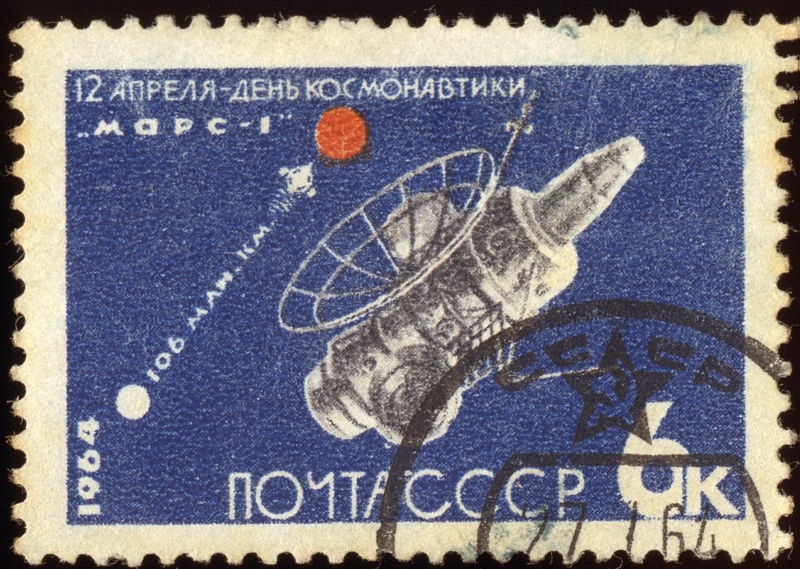
Although Mars was thought to have been studied at earlier date. As in 1960 a Russian proton k rocket called 1 m and weighted 650 grams had huge antenna attached. This probe was launched in 1960 reached martian orbit although tough to be hanging out around Jupiter looking for Internet as in picture. Russian tolerance towards creators suspect safe to assume that east German Russian project. As Nasa would have studied these strange dunes shapes in early sixties under president Kennedy may he rest in peace. Today it has been revealed this amazing v-shaped dune field on Mars - which looks uncannily like the Star fleet logo from the hit television show Star Trek. It was spotted by Nasa's Mars Reconnaissance Orbiter.see the difference. 
Nasa reveals dunes on the Martian surface that look like Star Trek logo. Unusual dune field spotted by Nasa's Mars Reconnaissance Orbiter. These pictures  contains dozens of 'wingtip dunes. It may at first seem a highly illogical picture. But fear not, you can Klingon to the knowledge it really did come from the surface of Mars. The 'wingtip' dunes were spotted in a dune field in a large crater near Mawrth Vallis, on the martian surface. They bear an uncanny resemblance to the Star fleet insignia badges seen on crew members throughout the series, shown here. This image was acquired by the HiRISE camera aboard the Orbiter on Dec. 30, 2013. As in this image of a dune field in a large crater near Mawrth Vallis, some of the dunes appear to be in formation,' Nasa said it likened the formation to flying birds.

'Migratory birds and military aircraftlike during World War II often fly in a V-shaped formation,' it said.'The 'V' formation greatly boosts the efficiency and range of flying birds, because all except the first fly in the upward motion of air called upwash from the wingtip vortices of the bird ahead.' sand winds. The odd shapes were formed by a combination of weather and terrain, they said. 'For dune fields, the spacing of individual dunes is a function of sand supply, wind speed, and topography includes gravity; The dune field has dozens of the strange shapes on it.The find isn't Star Trek's first brush with the Nasa's red planet projects. Earlier this year actor William Shatner joined growing calls for Nasa to investigate the bizarre 'jelly doughnut' shaped rock on the Martian surface. As William Shatner asked Nasa about the strange Mars rock found by Opportunity via Twitter during a press conference on the Opportunity rovers latest discoveries. As asking mission controllers if they had ruled out 'Martian rock throwers' but they couldn't say it small meteorites  either 'shooting stars' instead of rain mars has granite  showers. Mission controllers responding by saying Shatner's theory was 'unlikely'. 'We've got another question from Twitter, this one from William Shatner,' NASA spokesman Guy Webster said, according to space.com. 

A star-fleet flag from the show recently auctioned at Christie's. Willaims Shatner recently took to Twitter to question Nasa about its finding on the red planet. 'He'd like to know if you've ruled out the Martian rock throwers in the case of the jelly doughnut.'Nasa later said it had solved the mystery of a 'jelly doughnut' rock that appeared on the Martian surface and says it was just a rolling stone.The white-rimmed, red centered rock caused a stir last month when it appeared in an image the rover took on January 8th.More recent images show the original piece of rock struck by the rover's wheel, slightly uphill from where Pinnacle Island, the name Nasa gave the rock, came to rest.'Once we moved Opportunity a short distance, after inspecting Pinnacle Island, we could see directly uphill an overturned rock that has the same unusual appearance,' said Opportunity Deputy Principal Investigator. Ray Arvidson of Washington University in St. Louis.'We drove over it.  We can see the track. 'That's where Pinnacle Island came from.'

Saturday, 8 February 2014

High Advance Petawatt Laser System.

Chapter forty nine as new advances in laser science becomes created. 
With a particle laser installed into a lock heed star fighter the first aircraft design. To be the first generation protector its SR 72. It can travel at mach six that's equal to 4500 Mph, as it can fly comfortably in lower orbit. Space cruising brings compact design of first generation particle laser system. As it is called the High-Repetition-Rate Advanced Petawatt Laser System (HAPLS). It will emit 100,000 times more power than all the power stations in the world HAPLS is designed to ultimately generate a peak power greater than 1 petawatt (1015 or 1 quadrillion watts). Each pulse will deliver 30 joules of energy in less than 30 femtoseconds (trillionths of a second or 0.00000000000003 seconds)—the time it takes light to travel a fraction of the width of a human hair. The laser system will deliver these pulses of light at 10 hertz (10 repetitions per second).The Extreme Light Infrastructure (ELI) Beamlines project is an EU-funded lab being developed with experts from around the world, including Lawrence Livermore lab in the US, and being built in the Czech Republic. Due to be switched on by 2017, it will emit a short laser burst with an intensity of 1023 watts per square centimeter. 'ELI will become the first international laser research facility, much like a ‘CERN for laser research’, hosting some of the world’s most powerful lasers enabling a new era of unique research opportunities for users from all countries,' said Professor Wolfgang Sandner, director general of the ELI-Delivery Consortium International Association (AIBSL).
High-Repetition-Rate Advanced Petawatt Laser System (HAPLS), it will emit 100,000 times more power than all the power stations in the world. 
The system combines technologies from across Europe and around the world. It relies on a scheme referred to as 'double-chirped pulse amplification,' enabling high signal to noise in the output pulses which will seed HAPLS. It will be the most powerful laser ever created, and could give researchers incredible new insights into how the cosmos was created. Called the High-Repetition-Rate Advanced Petawatt Laser System (HAPLS), it will emit 100,000 times more power than all the power stations in the world - for a tiny fraction of a second. It has even been nicknamed the Death Star laser for its similarity to Darth Vader's laser wielding base in Star Wars.The project has been nicknamed the 'death Star' after the Star Wars craft that could blow up planets  The 'death star' laser: 
The solid-state, short-pulse laser converts the energy from the pump laser to 30-joule, 30-femtosecond pulses for a peak power exceeding 1 petawatt. The laser system measures just 4.6 meters wide and 17 meters long. 'HAPLS’s high repetition rate will make possible new scientific discoveries,' said Livermore physicist and HAPLS project manager Constantin Haefner. 'While scientists have long performed experiments with powerful single-shot lasers, they have never had an opportunity to repeat experiments at 10 times per second.' HAPLS will deliver ultra short, high-energy laser pulses for generating secondary sources of electromagnetic radiation (such as high-brightness x rays).
Accelerating charged particles (electrons, protons, ions). The laser technology will enable many applications in physics, medicine, biology, and materials science.High-Repetition-Rate Advanced Petawatt Laser System (HAPLS), it will emit 100,000 times more power than all the power stations in the world An early prototype of the system HAPLS will consist of two interconnected Livermore-designed laser systems that, when set up at ELI Beamlines, 
will require a combined space of about 4.6 by 17 meters, plus 4 square meters for the final laser pulse compressor. The first system—a diode-pumped, solid-state laser—will energize or 'pump' the second system—a chirped-pulse-amplification, short-pulse laser. Inside the Death Star: After amplification in the short-pulse laser, the chirped pulse is passed through an arrangement of diffraction gratings to produce HAPLSâ's final high-energy, high-power laser pulse. The real-life Death Star as us researchers developing laser 100,000 times more powerful than all of Earth's power stations combined. Will emit a short laser burst with an intensity of 1023 watts per square centimetre. 100,000 times more power than all the power stations in the world combined. Laser bursts will last only 1/100,000th of a billionth of a second. Laser being built by Lawrence Livermore lab