NASA LIVE.

Sunday, 30 November 2014

I.S.S. Expire's 2024.

Chapter sixty two as international space station is being decommissioned soon. I.s.s. has potential as space cruiser suggests it could be used as a base form off of the Planet Mars kept maintained off its sun edge calculating and probing the detailed typography terrain of the planetary sub floor, supplied by a rail gun.
But as the moon is only three days away could function as sling shot to Mars, go to moon then Earth onto mars, make these round trips more comfortable. Space Cruiser prefers ISS to be commissioned to the 'Planet Venus' as oxygen could be snorkel filtered as this could give a detailed study of past and present in detail soil erosion analysis complete by sampling using balloon buoyancy. But for almost two decades, the US and Russia have cooperated on the planning and construction one of the greatest undertaking ever known for mankind.
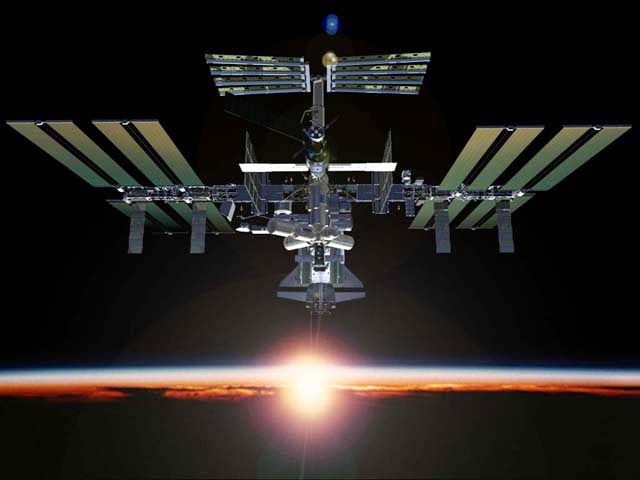
The International Space Station an venture in knowledge. But that could all be set to change as Russia is apparently going to withdraw from the project sooner than expected and build its own space station. Russia is apparently preparing to leave the ISS sooner than expected. As Nasa had hoped to keep the space station running until 2024 The new orbiting laboratory would be run by Russia alone, and it might be used as a precursor to missions to the moon. Russia is apparently preparing to leave the ISS (shown) sooner than expected. Nasa had hoped to keep the space station running until 2024.
But Russia may decide to get started on a new station sooner. Deputy prime minister Dmitry Rogozin said he was 'really doubtful' it could continue its involvement beyond 2020. As Russia is apparently preparing to leave the ISS (shown) sooner than expected. Nasa had hoped to keep the space station running until 2024. But Russia may decide to get started on a new station sooner. Deputy prime minister Dmitry Rogozin said he was 'really doubtful' it could continue its involvement beyond 2020. The development, reported by The Moscow Times, suggests Russia will not prolong its participation in the ISS beyond 2020. Nasa, meanwhile, had been hoping to keep it running until 2024, and possibly as late as 2028. Beyond that, it's thought the hardware will be too old to continue safe operation in space. As they are looking into various options, while building an orbital station as a substitute for ISS is one of them,' deputy chief of Roscmos Denis Lyskov said earlier this week according to Space Daily.
Why does Russia want to build a new space station ?
One of the main reasons is the orbit that the ISS is in. The ISS orbits at an inclination of 51.6 degrees, which means that from the station no more than 5 per cent of Russian territory is visible.
But their new space station will be at an inclination of 64.8 degrees, which would make about 90 per cent of Russian territory visible from on board, including Arctic shelf seas. In this orbit, the station would also be more reachable from Russia's new space centre - Vostochny Cosmodrome in far East Russia - which will begin launching unmanned rockets next year. By 2018 it is planned to begin performing manned launches from this location, to alleviate some of the strain on Baikonur Cosmodrome in Kazakhstan. Russia want to build a new space station as this is not entirely new; the Russian Space Agency.
Roscosmos, has previously stated their desire to build their own, beyond the ISS. This has a provisional name of Opsek (Orbital Piloted Assembly and Experiment Complex), and it may be used as a docking port for spacecraft on missions to more distant locations, such as the moon. However, the timing of it is a surprise; most had hoped Russia would continue their involvement with the ISS beyond 2020. Whether they will actually follow through with their plans, though, remains to be seen. 'How can they suddenly plan a new space station? It's impossible, 'Russian space industry analyst Pavel Luzin told The Moscow Times.

But, a source at the Central Research Institute of Machine Building (TsNIIMash) - Roscosmos' think tank - apparently told Russian daily newspaper Kommersant the plans were very much on the table. They said construction of the new station would begin as early as 2017, although this was later denied by Russia's deputy prime minister Dmitry Rogozin. 'There are rumours about Russia leaving the ISS project. We will not, the program is set to run until 2020 and we will stick to our international obligations, 'he said.
'As for prolonging it till 2024 - that's what we're really doubtful of.' Russia's deputy prime minster Dmitry Rogozin, pictured, said: 'There are rumours about Russia leaving the ISS project. We will not, the program is set to run until 2020 and we will stick to our international obligations. As for prolonging it till 2024 - that's what we're really doubtful of ' Russia's deputy prime minster Dmitry Rogozin, pictured, said: 'There are rumours about Russia leaving the ISS project. We will not, the program is set to run until 2020 and we will stick to our international obligations. As for prolonging it till 2024 - that's what we're really doubtful of 'Roscosmos has previously stated its desire to build its own space station beyond the ISS.
This has a provisional name of Opsek (Orbital Piloted Assembly and Experiment Complex), illustration shown, and it may be used as a docking port for spacecraft on missions to more distant locations like the moon. Roscosmos has previously stated its desire to build its own space station beyond the ISS. This has a provisional name of Opsek (Orbital Piloted Assembly and Experiment Complex), illustration shown, and it may be used as a docking port for spacecraft on missions to more distant locations like the moon. It's unlikely the new station would take as long to build as the ISS, as Russia would be able to repurpose many of the modules currently in space. When the ISS was constructed, it was built module-by-module, beginning with the Russian-built Zarya module in 1998.
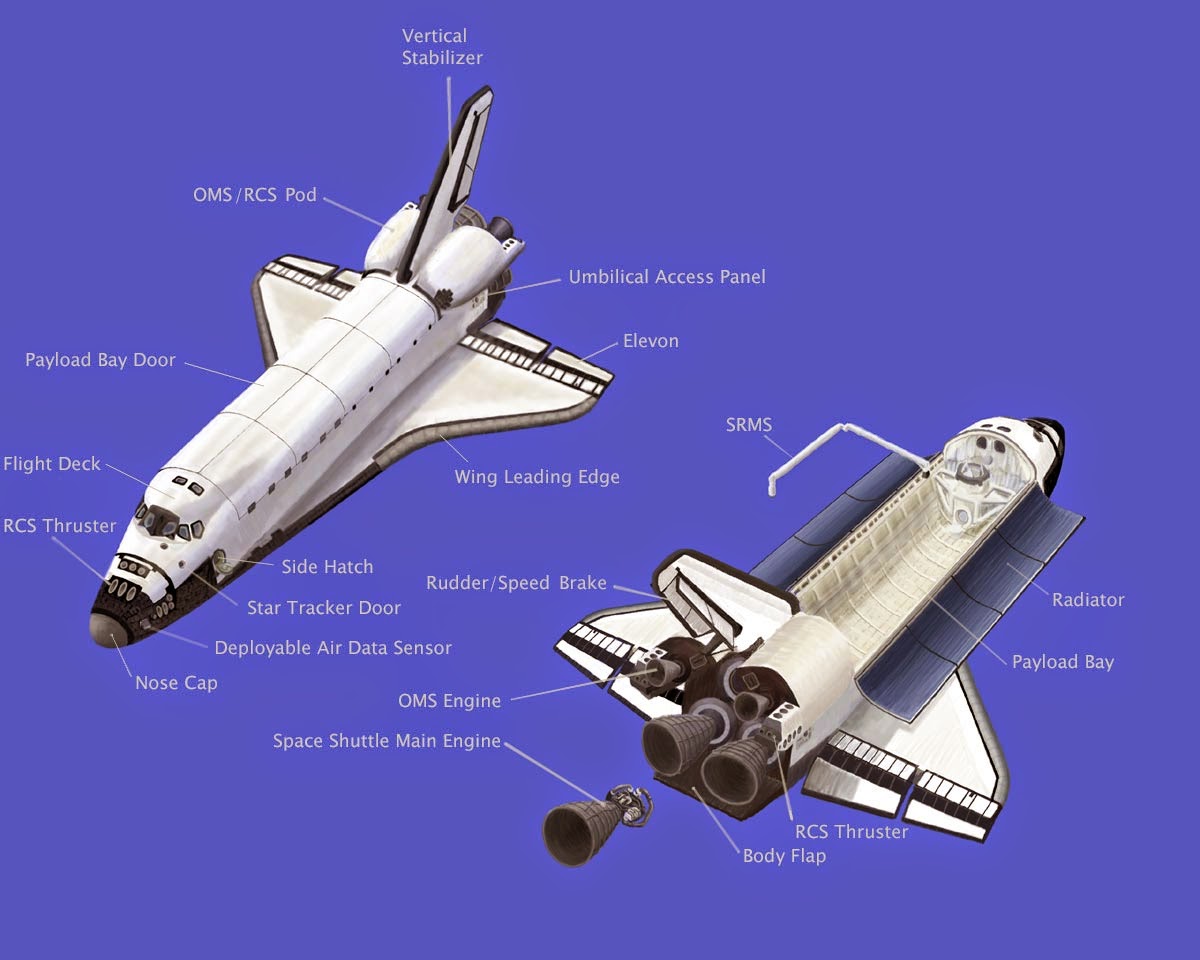
To construct the station, other modules were then taken to space one-by-one. For the US modules, they were launched inside the Space Shuttle and then attached to the station in orbit by the spacecraft.
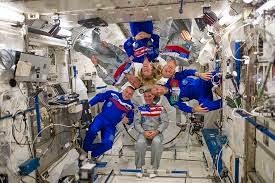
But the Russian modules flew to the station of their own accord, which means they have their own propulsion systems, whereas the American modules do not. This means Russia is able to move its modules to a new location and build a new space station, but with the Space Shuttle no longer flying, there is little Nasa can do with theirs. The ISS has been continuously manned since the arrival of Expedition 1 on 2 November 2000. Pictured from left to right are Yuri P. Gidzenko, William M. Shepherd and Sergei K. Krikalev.
The end of the ISS project will bring to an end two decades of human occupation in space The ISS has been continuously manned since the arrival of Expedition 1 on 2 November 2000. Pictured from left to right are Yuri P. Gidzenko, William M. Shepherd and Sergei K. Krikalev. The end of the ISS project will bring to an end two decades of human occupation in space.
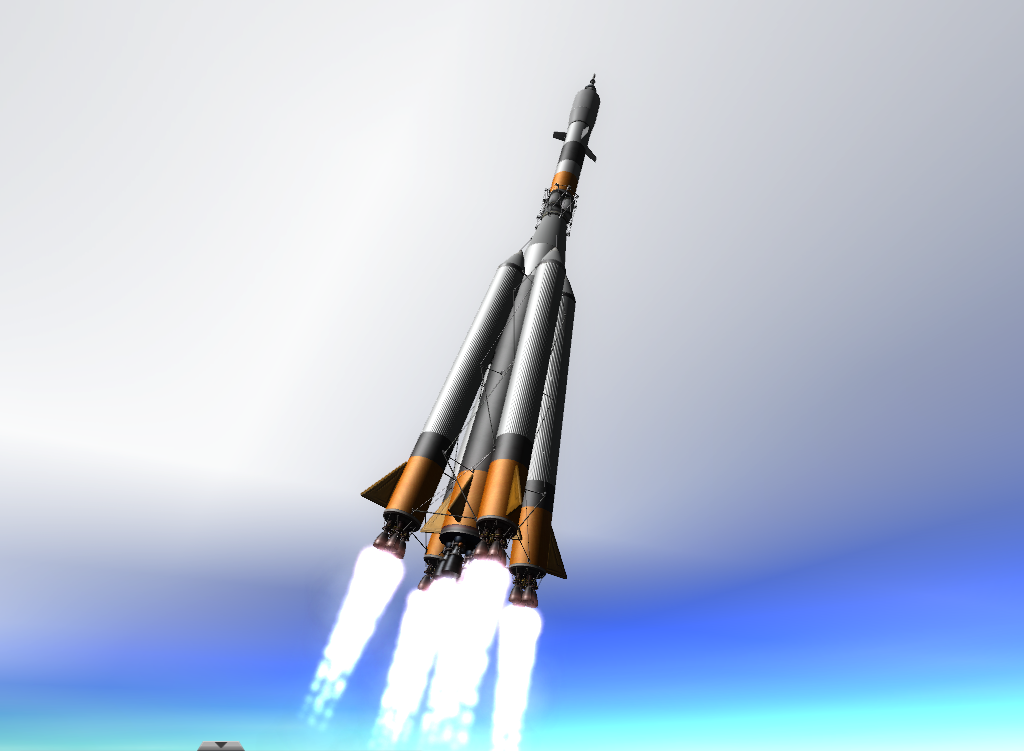
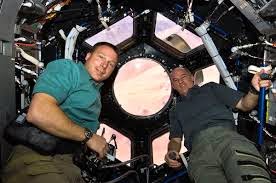
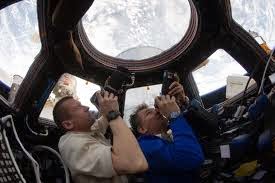
As Russia has also been preparing to fly its new heavy-lift rocket, Angara 5 (shown), which may be used to take components for the new station into orbit. Weighing 773 metric tonnes (852 tonnes), this rocket is the most powerful Russian rocket to be built since Energia in the late 1980s Russia has also been preparing to fly its new heavy-lift rocket, Angara 5 (shown), which may be used to take components for the new station into orbit. Weighing 773 metric tonnes (852 tonnes), this rocket is the most powerful Russian rocket to be built since Energia in the late 1980s here is a ocean view from the ISS.

The Russian segment can exist independently from the American one. The US one can not, 'Mr Rogozin said earlier this year. After 2020, we would like to divert these funds [used for ISS] to more promising space
projects.' Nasa is not against Russia building a new space station; the agency has previously confirmed it will deorbit its own modules at the end of the station's life. But the timing of when Russia plans to leave the ISS project, if confirmed, will be somewhat of a disappointment. Russia has apparently increased the budget for its space station operations from £ 2.8 billion ($ 4.3 billion) from 2001 to 2012, to £ 4.4 billion ($ 6.8 billion) from 2016 to 2025. Some have suggested this is in anticipation of the increased spending that will be needed to construct a new station. As the country has also looked into the development of new experimental components, such as inflatable modules. Ultimately, the agency could decide as soon as December whether to prolong its involvement with the ISS beyond 2020.
Russia May Be Planning National Space Station to Replace ISS | Business | The Moscow Times. Russia studies construction of its own orbital station. Crunch time for the ISS: Russia plans to quit the station in just six years - but Nasa is fighting to keep it running until 2024. But Russia may decide to get started on a new station sooner.
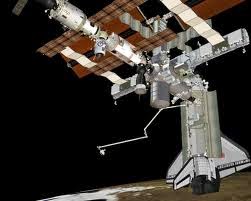
Deputy prime minister Dmitry Rogozin said he was 'really doubtful' it could continue its involvement beyond 2020 The country has previously stated it plans to build a new orbiting complex. However, the revelation it wants to quit the ISS earlier is a surprise. As Russia's plans a new station may be used as a stopping point for moon missions.

Hayabusa Two.

Chapter sixty one shows Japan's second probe called Hayabusa 2 is being deployed to asteroid Ju 99 Asteroid. As Japans first mission retrieved core samples back to Earth now on display, this mission aims more complex as it is due to inter-faze with the first probe.
As Japan has delayed the launch of its space probe for the second time due to bad weather. The Hayabusa2 will now blast off on a six-year mission to mine a distant asteroid aboard Japan's main H-IIA rocket from Tanegashima Space Center in south of the country on Wednesday at 1.22 pm local time. The probe was originally scheduled to launch today but Japan Aerospace Exploration Agency (JAXA) postponed it to November first 2014 after a forecast of thick clouds.
Hayabusa 2, pictured, will now blast off from Tanegashima Space Center on Wednesday at 1.22 pm local time Japan delays launch of its asteroid probe for the second time due to bad weather. The asteroid explorer will set off aboard the country's main H-IIA rocket from Tanegashima Space Center in southern Japan. Originally scheduled to launch today but the Japan Aerospace Exploration Agency postponed it to Monday due to a forecast of thick clouds. Comes weeks after European Space Agency made history after landing a probe on a comet.

Hayabusa 2, pictured, will now blast off from Tanegashima Space Center on Wednesday at 1.22 pm local time. The Hayabusa 2 had been set to blast off aboard the H-IIA rocket, pictured, from Tanegashima Space Center in southern Japan December 2014.
But the launch was postponed for the second time due to bad weather. The agency said it decided on the second postponement due to fears of strong winds, and warned that the launch could be delayed further depending on the weather. As this 31 billion yen ($ 260 million) project will send the explorer towards the 1999JU3 asteroid in deep space. Philae could come back from the brink in march 2015 detail samples off conjoined astroide on the esa rosetta  As the International Space Station to have two women on board for experments.
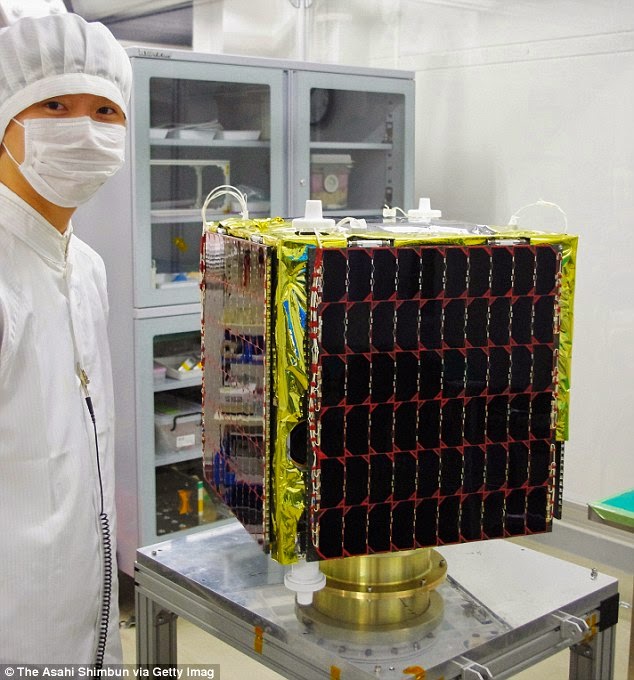
It will blast a crater in the asteroid to collect materials unexposed to millennia of wind and radiation, in the hope of answering some fundamental questions about life and the universe. Hayabusa2 will take off only weeks after a European spacecraft's historic landing on a comet captivated the world's attention as it bounced across its surface as its bowed harpoon failed to attach into surface. An aerial image shows the H-IIA rocket lifts off from the southern island of Tanegaon May 24, 2014 in Minamitane, Kagoshima, Japan. The Japan Aerospace Exploration Agency (JAXA) confirmed that the primary payload, the Daichi-2 advanced land observation satellite, reached its intended orbit about 600 kilometers over the Pacific Ocean. The Daichi-2 is the successor to Daichi, which recorded movements in the Earth's crust caused by the Great East Japan Earthquake in March 2011. (Photo by The Asahi Shimbun via Getty Images)
An aerial image shows the H-IIA rocket lift off from the island of Tanegashima in May this year. The probe, which is about the size of a domestic refrigerator, is expected to reach the asteroid in mid-2018 and spend around 18 months near it.

It will also study the surface by dropping tiny robots and if all goes well, asteroid samples will be returned to Earth in late 2020. The Hayabusa 2 mission will blast off just weeks after the European Space Agency succeeded in making mankind's first ever landing on a comet this month. As scientists said initial data sent from the robot lab Philae showed traces of organic molecules and a surface much harder than imagined. Philae, released from its mothership Rosetta, has gone into hibernation on the comet, having used its onboard battery power after 60 hours of prodding and probing.
As the D1KWXX December 26, 2012, Sagamihara, Japan - A scale model of the Hayabusa-2, an unmanned asteroid explorer, is shown at the Japan Aerospace Exploration Agency's Sagamihara Campus, southwest of Tokyo, on Wednesday, December 26, 2012. JAXA unveiled the unmanned asteroid explorer designed to retrieve samples of surface from the asteroid 1999 JU3 to the earth. The spacecraft will soon undergo the first integration test to confirm the interfaces among onboard devices before its scheduled launch in 2012. (Photo by AFLO) A scale model of the Hayabusa-2, an unmanned asteroid explorer, which is expected to return in 2020. The Procyon microsatellite, which will accompany the probe, developed by the University of Tokyo and the Japan Aerospace Exploration Agency.

Wednesday, 22 October 2014

Mission to Mars.

Chapter sixty as here with space cruiser has always stated that radiation from microwaves posses a huge risk to occupants of a confined space capsule where its hard to move. Some illustrations point how to lift off from Martian Surface, best to do robotic soil sampling test from the surface first. Although the tough did occur to question why NASA didn't send space shuttle mission around Planet Venus with quarters inside its payload. As well as stating waste as food posed a risk to average human and wheres all the renewed oxygen as water going to come from. This is why may need smaller people for example mere dwarfs. The Apollo missions only lasted days in space as getting to and from lunar lander as it reached lunar orbit to embark onto surface stage was a task. Became NASA main difficulty as pulling astronauts from their suits showed waste deposit that build up in their suit were partly caused by radiation sickness. As rescuers open the astronauts suits they began to vomit. So how would one design and build a Lunar Capsule, as it could leak, this has to go for seven days in a hostile vacuum with out hindrance? ' In america built a special vacuum oven and cooked the craft for a week' ant that something as sea tests as well, but cooking it shows the complexity of NASA Engineering. As stated it was very difficult and risky getting men on off of the moon because it was so complex. The american navy were contacted as they used a company to built the lander itself.

NASA were left with a lot less work as only needed to test this lander on Earth. A study from the University of New Hampshire suggests missions to Mars (illustrated) might be impossible. As the two astronauts are at an increased risk of radiation sickness. Research suggests when sun is less active its cosmic rays increase potentially fatal with amounts micro waves. This lowers the amount of time an astronaut can safely stay in space the research say, published in the journal Space Weather, was led by Dr Nathan Schwadron of the University of New Hampshire.

Mars mission could expose astronauts to deadly levels of radiation while traveling to the red planet, this study claims. A new study from the University of New Hampshire suggests missions to Mars might be impossible as two people enter an increased, risk of radiation for sustained duration year half. Research suggests when sun is less active cosmic rays increase this lowers the amount of time an astronaut can safely stay in space. It this predicted solar activity that continue to decrease in future. This will mean only male astronauts can stay in space for '320 days and for females this is reduced to just 240 days'. The Phobos Grunt Mission a huge loss with its stuffed equipment laird with gold sheets. This showed a old time example of lack of preparation. It took one whole decade of manpower. Anyone would ask for statistics known when where this mission could have failed 'This could have been for free'.
The Lunar mission tests showing lunar capsule to be defective, Not only did build new capsule as the engine start button flew out of the panel of the lander on the moon. As it had been said used a metal pen to lift off the lunar surface 'what luck'.

Neil Armstrong crashed the lander on Earth this was lander prototype, risked his place due to his injuries that he received. This all shows the use vast amounts of gathered knowledge. This would be too short a mission to and from Mars, Particularly for women as both would be susceptible to radiation sickness, cancer and more. Sending people to Mars may be impossible due to an increased risk time in space. Add two the radiation risk from cosmic rays, a study claims. It's thought that a predicted decrease in solar activity will raise the levels of radiation that are subjected to astronauts from cosmic rays, on deep space mission. This will Increase the risk of suffering radios of sickness, cancer and more on lengthy trips to the red planet lasting about a year.
This is to levels beyond what is considered safe. Study from the University of New Hampshire suggests missions to Mars (illustrated) might be impossible Should the first manned mission to Mars be all women. As a 30-year-old astronaut can spend about one year before cosmic rays in space-radiation raises the risk to exposure beyond safe and reasonable limits. Cosmic rays? A long-standing puzzle in astrophysics is the source from ultra high energy particles from space, as these hit Earth Ozone O3 layer gamma rays become filtered as seen by astronauts.
Called cosmic rays, they're up to a billion times more than energetic particles at CERN's Large Hadron Collider.
They strike the atmosphere and causes an enormous shower of other particles, mostly mini, electrons and photons, over a wide area. Though they were discovered following decades ago. As cosmic rays as other high energies are very rare, it makes it difficult to pinpoint where in the universe they originated. It's thought that some come from supernovas, but it's likely there are other sources of cosmic rays in the universe as well. As that's just enough time to get to Mars and back. However, many scientists predict that the sun's activity is weakening, Which would mean the number of days a human could spend in space before reaching the limit is less than previously thought. In fact, the next solar minimum could decrease the time by as much as 20 per cent - making a much more difficult to mission to Mars. This is a printer idea build a mettle glass structure although expense mole type as above creation Eskimo igloos for future inheritance, 'water that mars has should be very contaminated, has to be refined. with Earth based technologies.

With this possibly more life threatening. NASA sets limits on how much radiation it is safe for an astronaut to be exposed to. In the research it was found That it would take 400 days for a 30-year-old male astronaut to reach the maximum radiation this doesn't consider the last solar minimum this be higher. For a female, this drops to just 300 days. More worryingly, if solar activity a continue to decrease, then men could be allowed just 320 days in space, and women just 240 days then begin wriggle as been cooked inside. This would make a mission to Mars for more difficult for man, but for women it would be all but impossible without them succumbing to serious effects of radiation due nature tissue, menstrual cycle coordinated to lunar events.

While These conditions are not necessarily a showstopper for long-duration missions to the moon, an asteroid, or even Mars, galactic cosmic ray radiation in particular remains a significant and worsening factor to human limits. That equals mission duration,' says Dr Schwadron. 'These data are a fundamental reference for the radiation hazards in near Earth' Geo-space but 'out to Mars and other regions of our vast sun's heliosphere.' Cosmic rays originate outside the solar system - possibly in supernovas - and travel through our known universe. The solar wind. However, this radiation can push back (shown) and prevent it causing too many harmful effects. It is predicted solar activity will continue to decrease in future. Poses increasing levels of cosmic rays.

Ms Greene and five other crew-members three men and three women in total - spent four months in a dome in Hawaii. Leaving only the habitat in mock spacesuits. 

She says it was rare for a woman to burn more than 2,000 calories a day, whereas men regularly exceeded 3,000. Her conclusion is that sending women to Mars would be cheaper and more feasible than one with out girls. However, this latest research suggests that a missions by longer than available statistics will have limits as the amount of time a crew could stay in deep space before succumbing to harmful effects of radiation exposure. But during periods of decreased solar activity, the cosmic radiation levels increase to a point that would be harmful to future space explorers, according to functional the study. The sun's activity is known to have a clockwork 11-year cycle, with approximately six to eight-year lulls in activity, (solar minimum) Followed by two to three-year periods when the sun is more active (solar maximum). 
In 2006 the longest solar minimum has ever been recorded and observed, this brought` about the highest intensity of galactic cosmic rays, according to functional study. This created worsening radiation hazards than potentially been tought that would threaten deep space astronautical missions. Places to encase a shield undoubtedly have to be considered. This means run to an asteroid, coin a phrase hide and ride. 
Maybe utilize it with small robots, as to grow food and create a particle shield. At some point into Earths future knead to leave the planet. But living under ground in a Martian tunnel in human terms is a long way away. We need to colonize a martian Moon as the Russian scientist had striven to do and show how this could be achieved. Who knows Phobos grunt could have achieved, But with littered gardens found a blackened bolt, healed it up since thrown it away its sad that. As a Public forum would saved years of lost data and a decade of hard costly work and more as we all reside on Earth together.

Tuesday, 23 September 2014

To Venus Then Earth

Chapter fifty nine as here with a magnetic flywheel propulsion system to propel a small aircraft into shielded Planet Venus surface and back to Earth intact as with reentry. Time and date for a mission longer available as a hope for aircraft to land onto a aircraft carrier platform design. Here for now as with Planet Venus can it be done well in theory it is possible at least with design with a limited budget. So as here with Space Cruising here is the engine for this mission an electrical engine front and rear defusing a spinning wheel as a generator to power? Fuselage being cognoscente of its torso pull so create a plane as with gravitational effect.
So as to channel true solar buffeting or shield wave of resonance as umbrella to back from this inconvenience. Attach magnets to the wheel and have wire coiled around it. As the wheel spins, it moves electrons. You would not even need to attach it to an Axel. Use of a small aircraft need an Additions From its nose for its weight or volume, for storing electricity better than any battery or capacitor. Imagine a magnet impregnated carbon fibre rotor spinning in a high vacuum canister with magnetic bearings where no parts that touch. As the energy stored in a rotating wheel or any other moving mass is called kinetic energy. If you extract energy from the mass, then slows down it will have effect.
Newton's 3 laws of motion as a must propulsion mechanism know way around the forces create a focal tipping point on the pivotal as in this fig at aircraft nose.
Know here can use a design from Leonardo Da Vinci (if nothing interferes with the motion) It was supposed to be the new power source for electric cars. But pick a special point in space as with a calculated and a graph algorithm programmed bursts created in micro gravity pulling the tip from the true object space 'is not gravity wonderful will not even feel the gravity force instrument much what the heck.
Solar field this complex as a study the planets find Their actions are controlled by a flux. Sling shot onto Venus one plan shows varied descent trajectories.
 If the magnet was just the right strength, Surely it would be Able to pull the roller up the ramp while Allowing it to fall down the trap, Especially if you build the base of the ramp from numeral or a shield from the magnetic field to an extent. As here a few small aeroplane concepts the Messerschmidt me 163 engine component choose electrical jet turbine some RC enthusiasts photography shows center fugal wheel. Go with the top plate small central electrical jet engine as this with camera would make for easy do-able project for Planet Venus and back.

Sunday, 31 August 2014

Hibernated humans.

Chapter Fifty Eight if been in space without space suites working in a space-station with little or know protection, as a fully functioning human. Going to another planetary system travelling below light speed, as it called warp with out hardly any food in very small space, well could this is on the horizon?
As radical new procedures this involves replacing a patient's blood with cold salt water could retrieve people from the brink of death, says Professor Robson. University of Arizona, Tucson. 'as we can still bring you back'. even near four hours after body is clinically dead, space cruising points towards as this could extend into extended periods of hibernation as new oxygenated solutions are developed into the future although these carry risks similar exercise to squires. as Rhee is not exaggerating like a process. With Samuel Tisherman, at the University of Maryland, College Park, that he has shown it's possible to keep bodies in 'suspended animation' for hours at a time. The procedures so far from been tested on animals. It is about as radical as any medical procedures comes. As it involves draining the body of blood and its cooling it to more than 20C below normal body temperature. Once the injury is fixed, blood is pumped through the veins once again, and the body is slowly warmed back up. "As the blood is pumped in, the body turns pink right away, as the say. At a certain temperatures, the heart flickers into life of Its own accord. 'It's quite curious, at 30C the heart will beat once, as if it came out of nowhere, then again as it gets even warmer it picks up all by itself.' Astonishingly, the animals in their experiments show very few ill-effects ounces they've woken up. They'd be groggy for a little bit but back to normal the day after, says Tisherman. If the trials go according to functional plan, Tisherman would like to extend the approach to other kinds of trauma. Gunshot victims were chosen for the initial trial. This was because it is cutting easier to localisation the source of blood loss, but eventually he hopes to treat internal bleeding from an automobile accident, for instance. It may even, one day, be used to treat people suffering from heart attacks and other kinds of illness.
This is only one technology as the main problem with freezing is formation of ice crystals which damages organs as a bruising effect causes expansion and death. But with life comes sanitation as returning from the moon proved Astronauts were up to neck in body waste, which never talked about. Two ways travelling to a robot prepared planet. One is have a planet size structure or the other state of hibernation. As all one would need is a human body, although their are androids. Someone may be trapped inside their own body yet able to think and feel to varying extents classed as dead disconnected. The number of patients with disorders of consciousness has soared in recent times following treatments decades. Ironically because doctors have steadily got better at saving patients with catastrophic injuries.  "Cheating death with 'suspended animation. This involves killing a patient to save there life. This was the New York Times' take. hyped up news coverage. As has sometimes offended Tisherman's as hes cautious sensibility. During our conversation, he comes across as a thoughtful, measured man. Who is careful not to oversell his research. Particularly he is wary of using the term 'suspended animation'. As a concern is not that it's inaccurate - it's that when people think of the term, they think about space travelers being frozen and woken up on another planet. Or as Han Solo in Star Wars," he says. "That does not help, Because It's important for the public to know it's not science fiction - it's based on experimental work and is being studied in a disciplined manner. Before we use it to stop people dying.  Rhee, who came to global attention after treating congresswoman Gabrielle Giffords after a shooting in 2011 tends to be bolder. As he says he would not rule out longer-term suspended animation, in the distant future. But what there doing is part of beginning of that experiment. this inflatable still has to collect H2o although are new processes to freeze dry this use thermal electric.
The boundary between life and death is increasingly unclear try to massage the heart back to life. Safar's work began to change our perceptions of death - blurring the point that is meant to mark the end of our lives. "We've all been brought up to think death is an absolute moment - when you finish you die you can not come back, yea even seven days later that's a whole week says Sam Parnia. So at the State University of New York at Stony Brook. "It used to be correct, but now with the discovery of basic CPR we've come to understand this. That the cells inside your body do not become irreversibly after 'dead' for hours after you've 'died' Even after you've become a cadaver, 'you're still retrievable'. Blurred line Tisherman now thinks of death as the (Admittedly Subjective) point at which doctors give up resuscitation as a lost cause - but even then, some people can still make a remarkable comeback. As a paper in the journal Resuscitation Caused a stir by suggesting that 50% of those surveyed in emergency doctors have witnessed the 'Lazarus phenomena', in which has begun. As patient's heart beating again by itself gone o go on, after doctors had given up hope. Heart can go into suspended animation. well documented trough out history.  Some people have come back from the dead, even after CPR has stopped. Combined with machines that can take over circulation and pump oxygen into the blood stream while the heart is being revived. This has helped open the window between cardiac arrest and brain death. Although age plays a factor like twenty something been woken up by family member injecting lease of life. One hospital in Texas that recently reported an 40-year-old man Had survived. Bare this in mind with his mind intact, after three-and-a-half hours of CPR. His treatment involved-a constant rotation of medical students, nurses and doctors. These were taking it in turns to perform the chest compression's. Four whole hours of death-conventional thinking is the brain kneads half of the bodies oxygen and third of the bodies food. Say hypothetically a dismembered head on an android maybe a solution. Only question is how or if a body is willing to accept this in stages off a column on machine. Just say for an example a person body been damaged could they be saved. Then just say question becomes how long will they live for, call this the blue line. Other doctors are watching with interest. "It's very brave," said one specialist. Many of us feel that in order to preserve the brain, we have to cool the body a lot more than we've done traditionally. But people have been afraid to do this but with animals results be more promising future android pet.

Monday, 4 August 2014

Planet Venus Nearest.

Chapter fifty seven as the planet Venus seems an amazingly suitable for a human space station, similar to international space station and as its easier to solar sail away from back towards earth. Before having multiple rovers landing on mars. Surviving inhabit one has to rise up through the clouds of Venus to an altitude of 50-60 kilometres above its atmospheric pressure and temperature. As then it becomes similar as conditions of Earth without radiation. Venus moon based on its absolute magnitude, and they determined a spin rate of 13.5 hours full rotation. As plants use sunlight to make food. There could even be a non-carbon-based equivalent to lichens a top Venus' five-mile-high volcanoes, perhaps feeding on sulfur gases, 'Researchers said Space Cruising'. some of illustrations certainly point to a migration from Venus towards Earth via field of debris which occurred.
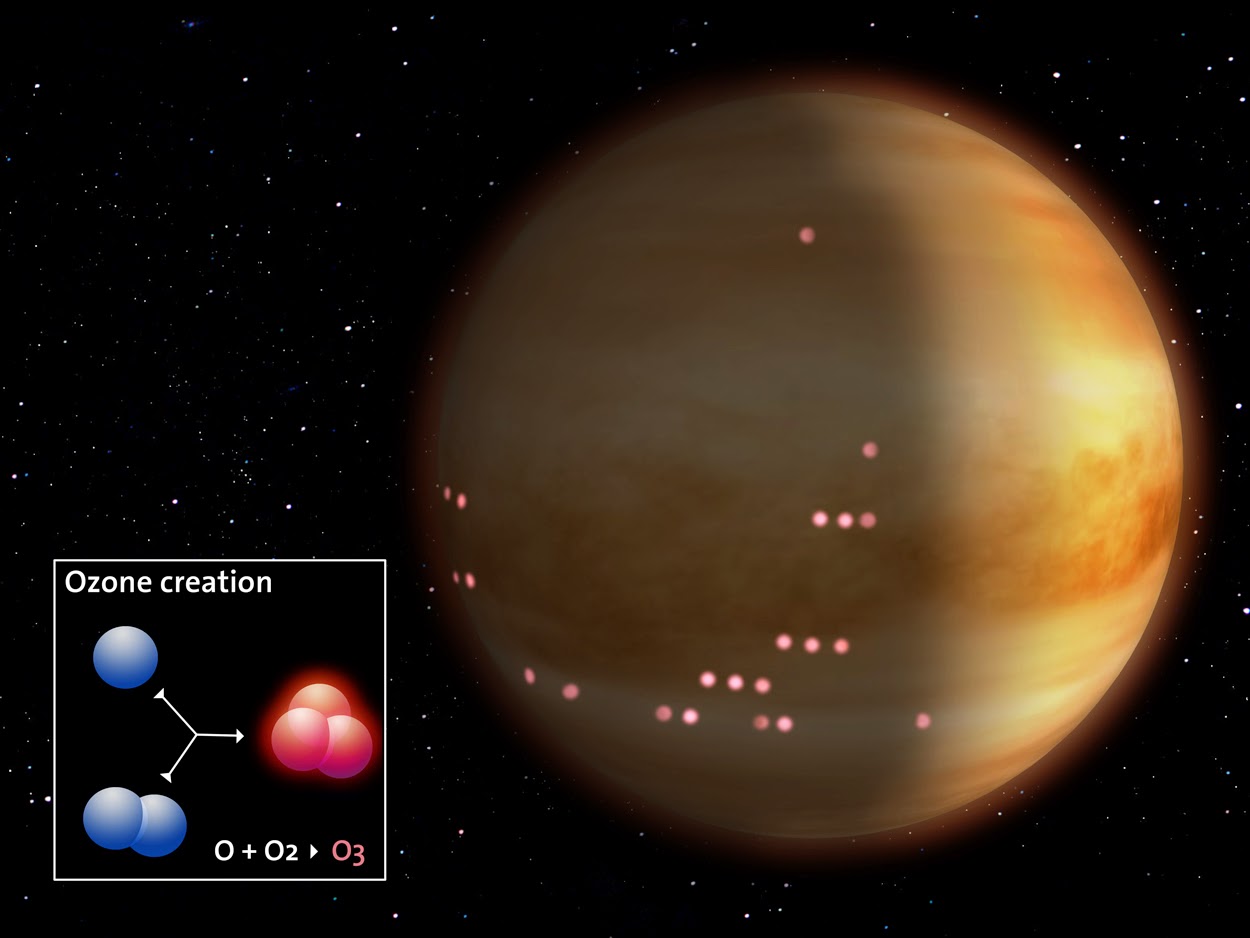
Planet Venus atmosphere would still be full of nitrogen similarity in pressure, temperature and the fact that full of breathable air (21% oxygen, 78% nitrogen). Oxygen is a lifting gas on Venus in the same way that helium is a lifting gas on Earth. "the toxic carbon dioxide, but breathable air would be used as a 'lifting gas' on Venus plenty ozone. If there should be water within the planet as suggestion states there are gushers lurking finding where they exist. Then these floating balloons of water could float up into the skies of Venus. A balloon made of near breathable air. One could stand out on the deck of your Venusian sky city in shorts and a T-shirt, soaking up the sunlight in regular Earth gravity watch sand towers emerge as laser develop structure this would be the idyllic way to freeze dry a build and as to laser welding a structure into place 'but could it be this simple here a video from ESA express air braking across planet surface at 60th ft'?
A maned express as observatory then back to earth not complicated as a small feet in engineering. It may be possible to collect oxygen from upper atmosphere braking ozone up with help CFC have to make water in reverse combining hydrogen to oxygen way hay. Venus sounds idyllic, right well knead a lot of water H20 to maintain habitat but if somehow process water this not unthinkable have a 'sister planet' where already breath yea resource funds. But if ones is prepared to hard-wire a tread of ice. This water could be collected sort to speak, but its a maybe its a place where have an android instead 'this is the completed express mission'?
So planet Venus in any opinion could be bread winner, some still think Mars is the most Earth like place in the Solar System. But a lot more astronauts would survive on a space station. A now 'Venus Express' and could return to Earth. Also have Planet supply Venusian Moon 2002 VE 68 that no probe has landed on, as of yet. Findings on the Planet Venus heat radiation reflected away by ozone as there's no 'water vapor just large amounts carbon dioxide and pressurized green house gas this creates an acid effect on the surface? As with underground vents could manipulation create sufficient cooling allow laser drilling for water gushers self supporting colony. Tap into atmosphere well why complicate things as it has an atmosphere and temperature and gravity that could supply all of kneads besides the planets soil sitting in wait.
But the shared opinion is there no way back with today's technology from surface of the planet mars and if mars were like earth there are still to many hazard-es obstacles attached to the red planet mars. The clouds of Venus are the place to step create and sail home. "There's a lot of interest in Venus at the moment but no funds for example a 'Venusian Rover Instead For 2020', Still looking at Mars lately and in some ways Mars is Earth's twin, but in even more ways, Venus is Earth's step away and could make life on Earth much easier. So we could learn a lot about Earth by studying Venus and how to overcome global warming as a continuing rate of rain drops called toxic.
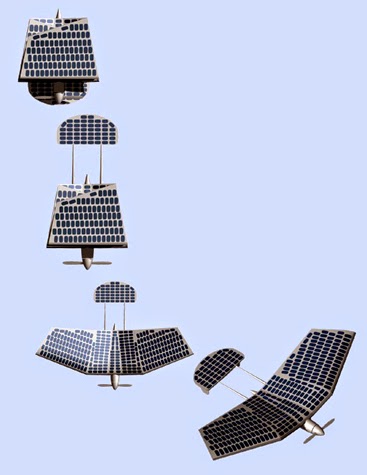
Photo of Venus from Earth with 2002 moon at its apex furthest point from earth. A solar powered Aircraft has been a long-time interest from a company Landis. As it has spent a lot of time perfecting the combined probe. The idea of ​​flying an space-plane around Venus sounds very interesting. Since about fifteen years a team have been studying this concept and Landis recently presented their findings to NASA's for Venus probe to get funding.
So been trying to drum up enthusiasm for the things they done research," he said. The main work the group has done so far has been focusing on the aeroplane itself. verifying that the concept is actually going to work. "We've done a thorough design study to determine if there are any showstoppers keep a probe air born. they don't think there are. they think it a very doable project. Exploring Venus become known as onto the fire. Venus Express is not the first spacecraft to journey this far into the Venusian atmosphere. That honor is bestowed to a series of Soviet spacecraft in the 1960s, 70s and 80s called the Venera probes. As About a dozen were sent on daring missions to the surface of Venus, with only a handful being successful.  The intense heat and atmospheric pressure crushed each of the probe in an hour once they had penetrated the atmosphere - but a few managed to survive long enough to return data or images.
The Venera probes were succeeded by the Vega spacecraft, high-altitude balloons that were sent into the atmosphere of Venus on scientific missions.
Just getting interested parties involved. As The Moon Buggy Idea is hard to get away from and this is never going to be a prospect proposed for the planet Venus Pioneers. As it would be more shift towards a modular space station using balloons and anchors like boating . Not that anyone will be herding there as atmospheric pressure fifty times that of Earth. This planet is a very doable options as livable outpost. Quick service to and from this planet orbiting in upper atmosphere gravity bound  'Venus Space Station' using its surface to build find solution green house gasses.
Also landing on Martian Moon Called Phobos Grunt Mission. As Russia would have nearly done this only for rocket mishap 2011 worked on for a decade. Then there is Asteroid Ceres far escape near two years away in conventional terms. Could Venus become a colony before all the failings attempts of mars. Will asteroid Ceres eventually boils dry, as this is never going to happen in human terms. The Planet Venus seems have all ingredients for the 'now future colony oxygen at least and atmosphere if willing to reside in balloon type space-station' but who listening it mars do or die?